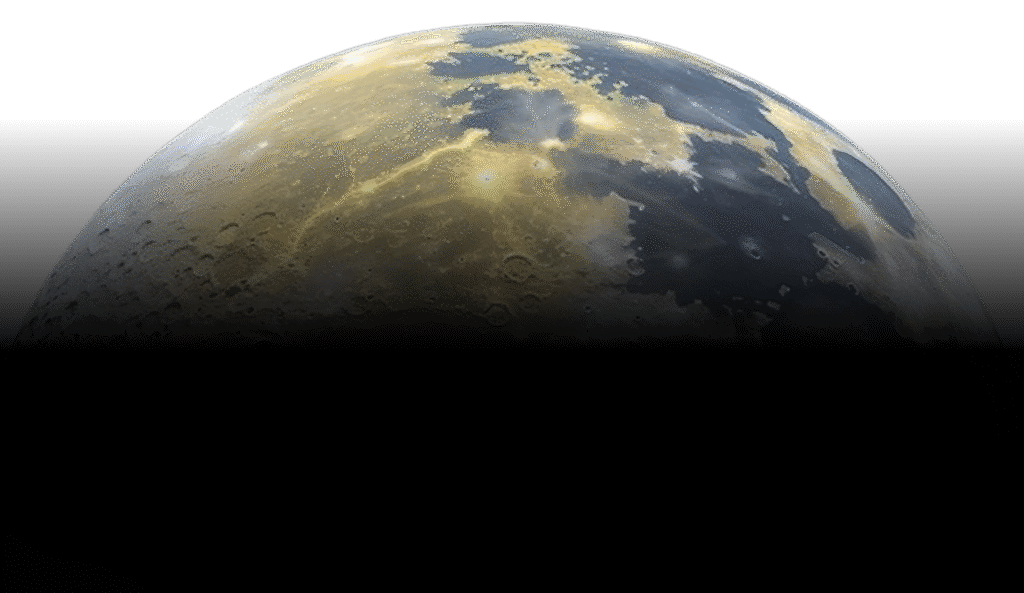
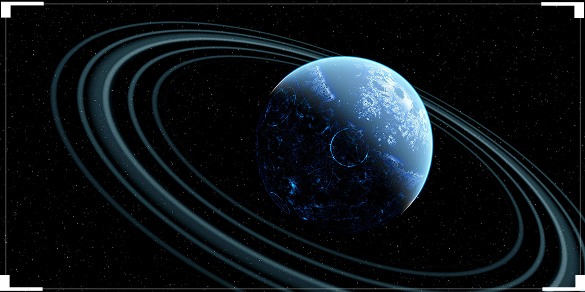
The “ice giants” are a class of giant planets that primarily include Uranus and Neptune in our Solar System. These planets are distinguished by their composition and structure, which differ significantly from the gas giants Jupiter and Saturn.
The atmospheres of ice giants contain molecular hydrogen, helium, and traces of methane.They have complex weather systems, with powerful storms, and Neptune, in particular, has intense winds.
Why “Ice Giant”?
Although Uranus and Neptune don’t have icy surfaces, the term “ice giant” helps differentiate them from gas giants because they have more “volatile” materials in their composition.
URANUS
The Sideways Ice Giant
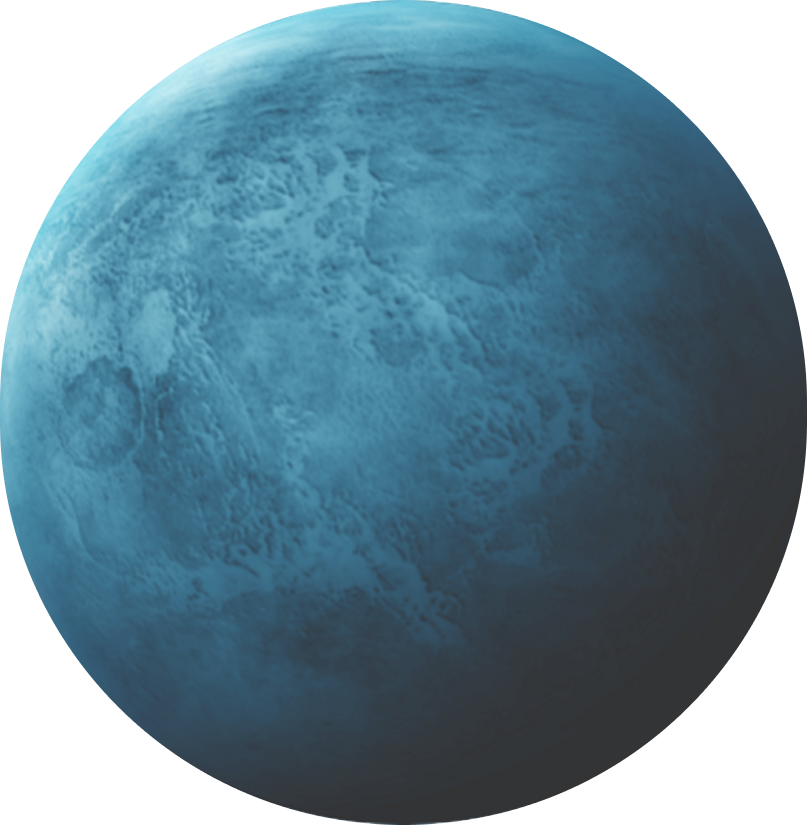
Uranus is the seventh planet from the Sun and one of the two Ice Giants in our Solar System. It has a pale blue color due to methane in its atmosphere and rotates on its side, making its seasons extreme. The planet has faint rings and dozens of moons, each with unique features and icy surfaces.
Uranus is cold, distant, and mysterious, with a strange tilt that makes it unlike any other planet.
Uranus has an unusual magnetic field that is tilted and offset from its center, unlike most other planets. Its atmosphere features strong winds and occasional storms, although they are less visible than Neptune’s. Scientists believe Uranus may have a rocky core surrounded by icy layers of water, ammonia, and methane. Exploration of Uranus remains limited, making it one of the least understood planets in the Solar System.
NEPTUNE
The Windy Blue Giant
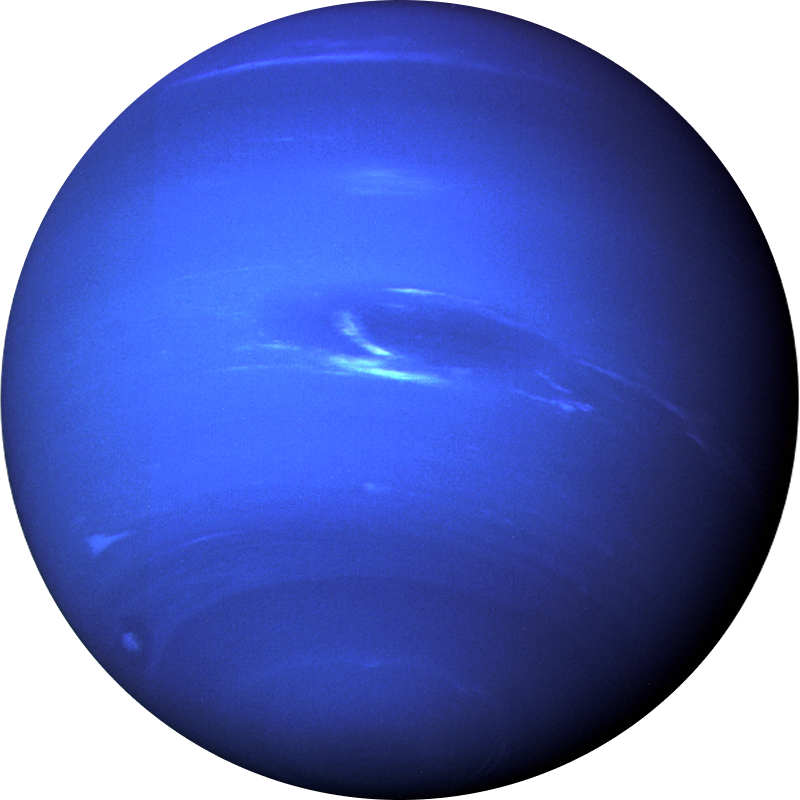
Neptune is the eighth planet from the Sun and the most distant Ice Giant in our Solar System.
Its striking blue color comes from methane in the atmosphere, and it has the strongest winds in the Solar System, reaching over 2,000 km/h.
Neptune hosts massive storms, some larger than Earth, and has faint rings and 14 known moons.
Its largest moon, Triton, is icy and geologically active, making Neptune a fascinating and mysterious world for astronomers.
Difference Between Ice Giants and Gas Giants
Ice Giants and Gas Giants are two types of giant planets in our Solar System, each with unique characteristics. Ice Giants, like Uranus and Neptune, are smaller, colder, and contain more ices in their composition. Gas Giants, such as Jupiter and Saturn, are massive, mostly made of hydrogen and helium, and host enormous storms. Comparing them helps us understand the diversity of giant planets and the fascinating variety of worlds beyond Earth.
Composition
Ice Giants are composed mainly of water, ammonia, and methane ices, with smaller amounts of hydrogen and helium.
Gas Giants are mostly hydrogen and helium, with very few ices in their interior.
This difference in composition affects their density, color, and magnetic fields.
Ice Giants appear blue-green, while Gas Giants show yellows, oranges, and reds.
Size & Mass
Ice Giants are smaller, around 10–15 times the mass of Earth.
Gas Giants are much larger, with hundreds of Earth masses.
The greater mass of Gas Giants leads to stronger gravity and thicker atmospheres.
Size differences also influence their number of moons and ring systems.
Atmosphere & Weather
Ice Giants have methane in their atmospheres giving them a blue hue.
They have strong winds and occasional storms, but generally milder than Gas Giants.
Gas Giants host massive storms like Jupiter’s Great Red Spot.
Their thick hydrogen-helium atmospheres produce more dramatic weather systems.
Rings & Moons
Ice Giants have faint rings and dozens of mostly icy moons.
Gas Giants have prominent ring systems and many large moons.
The differences in satellite systems are a result of planet size and gravity.
Studying these differences reveals how giant planets form and evolve.